Nobody cooks well in the first weeks with a newborn. Sleep is broken, hands are full, and the window between deciding to eat and needing to eat is about four minutes long. A freezer stocked before the birth, or by somebody else afterward, is one of the few pieces of preparation that keeps paying out. But the meals that actually get eaten in that period are a narrower set than a general list of freezer recipes suggests. They need to reheat unattended, taste fine at slightly the wrong temperature, and be manageable with one hand.
What Survives the Freezer, and What Doesn’t
Freezing is hard on texture, not on flavor. Things with body and fat come back well: stews, braises, chili, curry, meat sauce, soups with beans or lentils, cooked grains, meatballs, shredded cooked chicken, cooked sausage, breakfast burritos, and most baked pasta. Anything saucy improves after a few days, which is a useful property in a house where nobody is tasting critically.
What does not come back well: potatoes in soup, which turn grainy; cream sauces, which split; raw salad vegetables; fried food, which goes soft; hard-boiled eggs; and pasta frozen already cooked and loose, which arrives as mush. Two workarounds cover most of it. Undercook pasta and rice slightly if they are going into a dish, and add dairy after reheating rather than before.
Meals You Can Eat One-Handed
This is the constraint that gets ignored most often, and it matters more than variety. A bowl of stew and a spoon works. A plate that needs a knife does not, because one arm is holding a baby. Aim for a stock of the second kind of food.
The reliable shapes are soups and stews eaten from a mug or bowl, filled things that can be held (burritos, hand pies, stuffed flatbreads, baked rice balls), pasta bakes cut into squares, muffins and savory scones, and anything designed to sit on top of a grain that reheats in the same container. Add a bag of frozen vegetables and a stack of tortillas and most of the assembly disappears.
Portioning, Labelling, and Freezing Flat
How a meal is packed determines whether it gets eaten. A single family-sized container of chili is a thing you have to plan around; the same chili in six flat bags is dinner in ten minutes.
- Portion for two, not for four. Two adults eating at different times is the real pattern of those weeks. Small portions also thaw much faster.
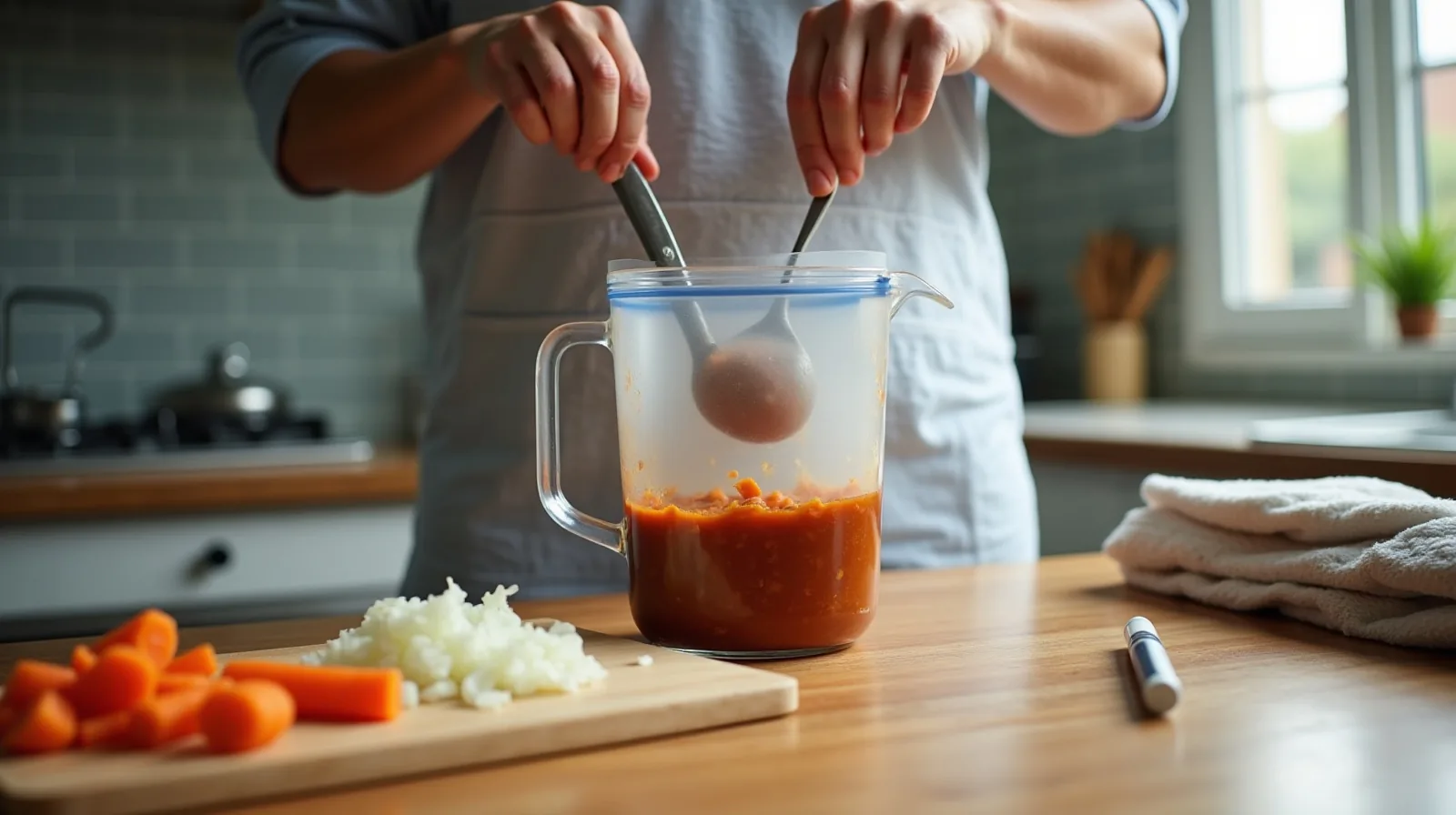
- Freeze bags flat. Fill a zip bag, press the air out, lay it flat on a tray until solid, then stand the slabs upright like files. Flat food thaws in a fraction of the time and stores three times as densely.
- Label before filling. Write what it is, the date, and the reheating instruction on the empty bag. Nobody can write on a full, cold, wet bag, and unlabelled freezer parcels get quietly ignored for months.
- Write the instruction for a tired reader. “Oven, covered, 30 minutes, 180” beats “bake until hot” at three in the morning.
- Keep one shelf as the meal shelf. Everything ready-to-eat lives there. No hunting behind bags of peas.
What to Bring Someone Else
Bringing food to a family with a newborn is one of the most useful things anybody can do, and a few adjustments make it far more useful. Ask about allergies and about anything a nursing parent is avoiding, then deliver in disposable containers so nothing needs returning. Bring it frozen and flat rather than hot, unless a specific time was agreed: hot food arrives during a nap as often as not, and a doorstep handoff is kinder than a visit.
Include the boring things, because nobody else does: milk, bread, fruit that can be eaten with one hand, a big container of cut vegetables, snacks that live next to a feeding chair. Postpartum appetite can be significant, particularly for a nursing parent, and any specific dietary questions are worth raising with a doctor or midwife rather than a group chat. What arrives should require no decisions from the people receiving it.