Six o’clock arrives, the fridge offers no obvious answer, and the carton of eggs sitting in the door gets overlooked because eggs have been filed under breakfast since childhood. That filing is the only thing standing between a bare fridge and a genuinely good dinner. Eggs cook in minutes, cost less than almost any other protein, and behave like a blank plate that takes on whatever else is in the house. Four techniques cover most of what a weeknight needs, and none of them requires a recipe once the shape is familiar.
Why Eggs Hold Up as Dinner
An egg brings complete protein, cooks faster than anything that needs thawing, and carries flavor rather than competing with it. That makes it the ideal vehicle for leftovers: half a cooked potato, the last of a bag of spinach, a wedge of cheese, cold rice. The practical advantage is speed with structure — unlike a snack assembled out of odds and ends, an egg dinner arrives at the table looking like a meal. Portion for hunger rather than habit, since two eggs read as breakfast and three or four per person read as supper.
Four Dinners Built on Eggs
Each of these is a technique rather than a recipe, which means the contents change with whatever the fridge is holding.
- The skillet frittata. Soften vegetables in an oven-safe pan, pour beaten eggs over, cook gently until the edges set, then finish it under the broiler. Cut into wedges; leftovers are good cold.
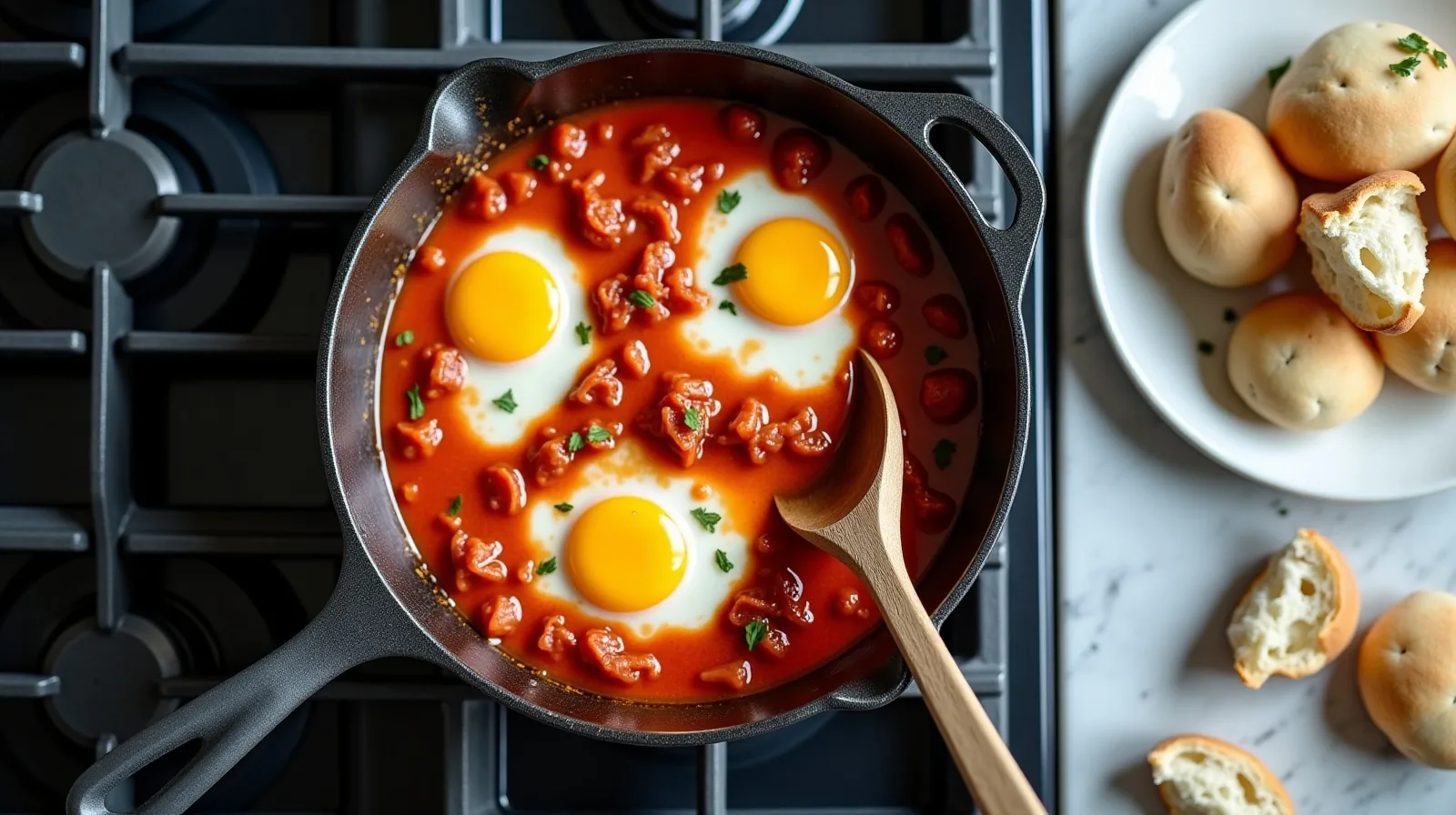
- Eggs poached in sauce. Simmer canned tomatoes with garlic, spices and a little oil, make wells in the sauce, crack eggs in, cover and let them set. Bread on the side does the rest.
- The fried-rice topper. Fry day-old rice hard with scallions and whatever vegetables exist, then slide a crisp-edged fried egg on top and break the yolk into it as a sauce.
- A proper omelette. Beaten eggs into a hot buttered pan, stirred for a few seconds, then left alone to set before folding over a small amount of filling. Fast enough to make one per person in sequence.
- Soft-boiled eggs over greens or noodles. Six to seven minutes in boiling water, ice bath, peel, halve, and drop onto anything that needs richness.
Reading Doneness Without Guessing
Overcooked eggs are the most common failure, and they are almost always a heat problem rather than a timing one. Keep the pan lower than instinct suggests. A frittata is ready when the center barely wobbles and the surface has lost its shine; residual heat finishes it in the pan while it rests. Poached eggs in sauce are done when the whites are opaque and the yolks still move under a gentle nudge — pull the pan off the heat a moment early, because the sauce keeps cooking them. Scrambled eggs come off while they still look slightly underdone, and an omelette is folded while the top is glossy and just barely set.
What to Serve Alongside
Eggs need a partner with texture and something acidic, or the plate feels soft and one-note. Bread is the obvious answer and the best one: toast, a torn baguette, flatbread warmed in a dry pan. A sharply dressed green salad cuts richness better than anything cooked. Roasted or pan-fried potatoes turn any of the four into a proper plate, and a spoonful of yogurt, a splash of hot sauce, or a few pickled onions supplies the sharp note. Keep bread, a lemon, and something pickled in the house, and every egg dinner has a finish.
The Short List That Makes It Work
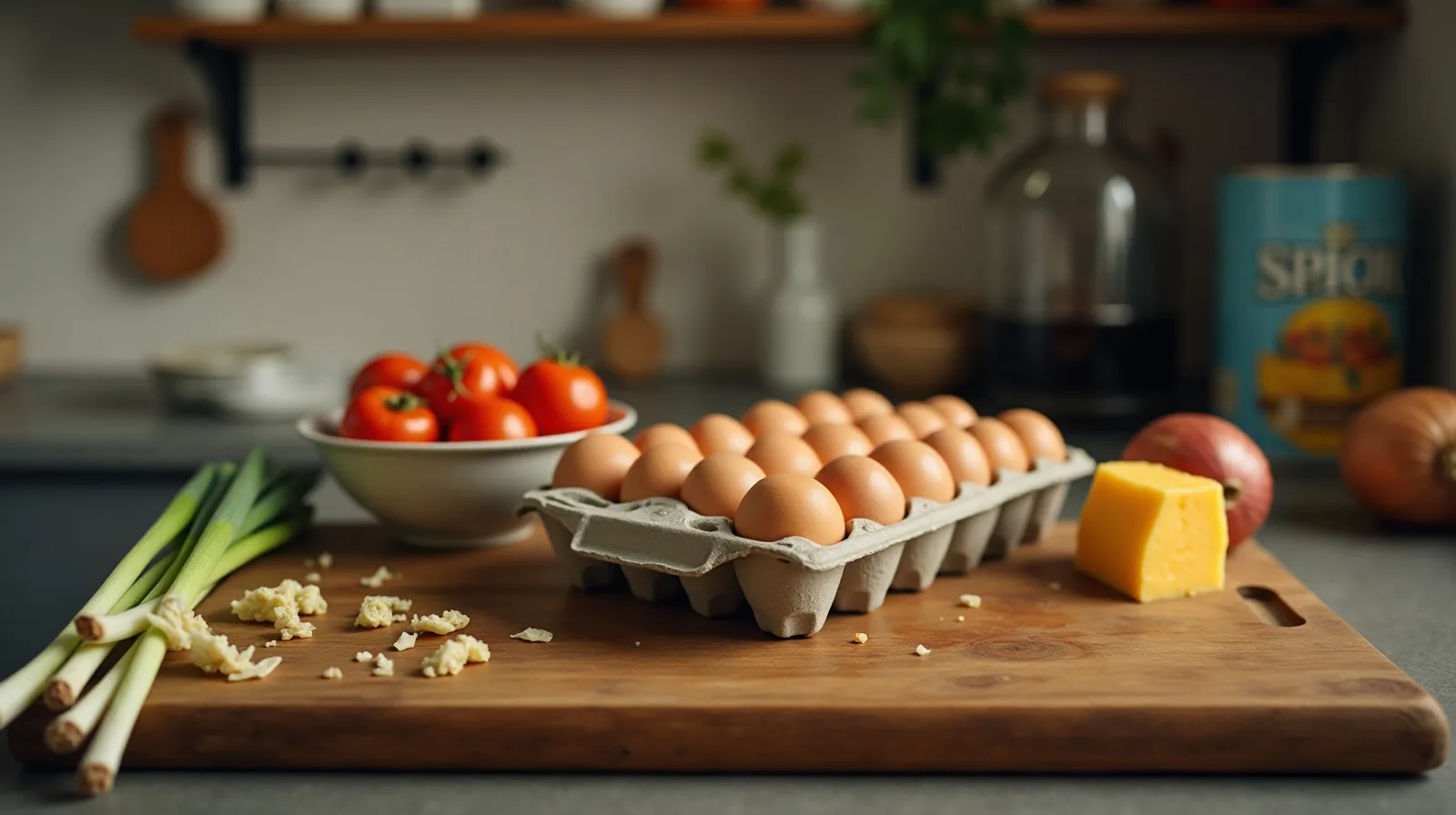
Very little needs buying. A dozen eggs, a can of tomatoes, an onion, garlic, a hard cheese, scallions, and a loaf that lives in the freezer will cover all four techniques. Add one nonstick or well-seasoned skillet small enough that four eggs fill it, and dinner stops depending on planning at all.