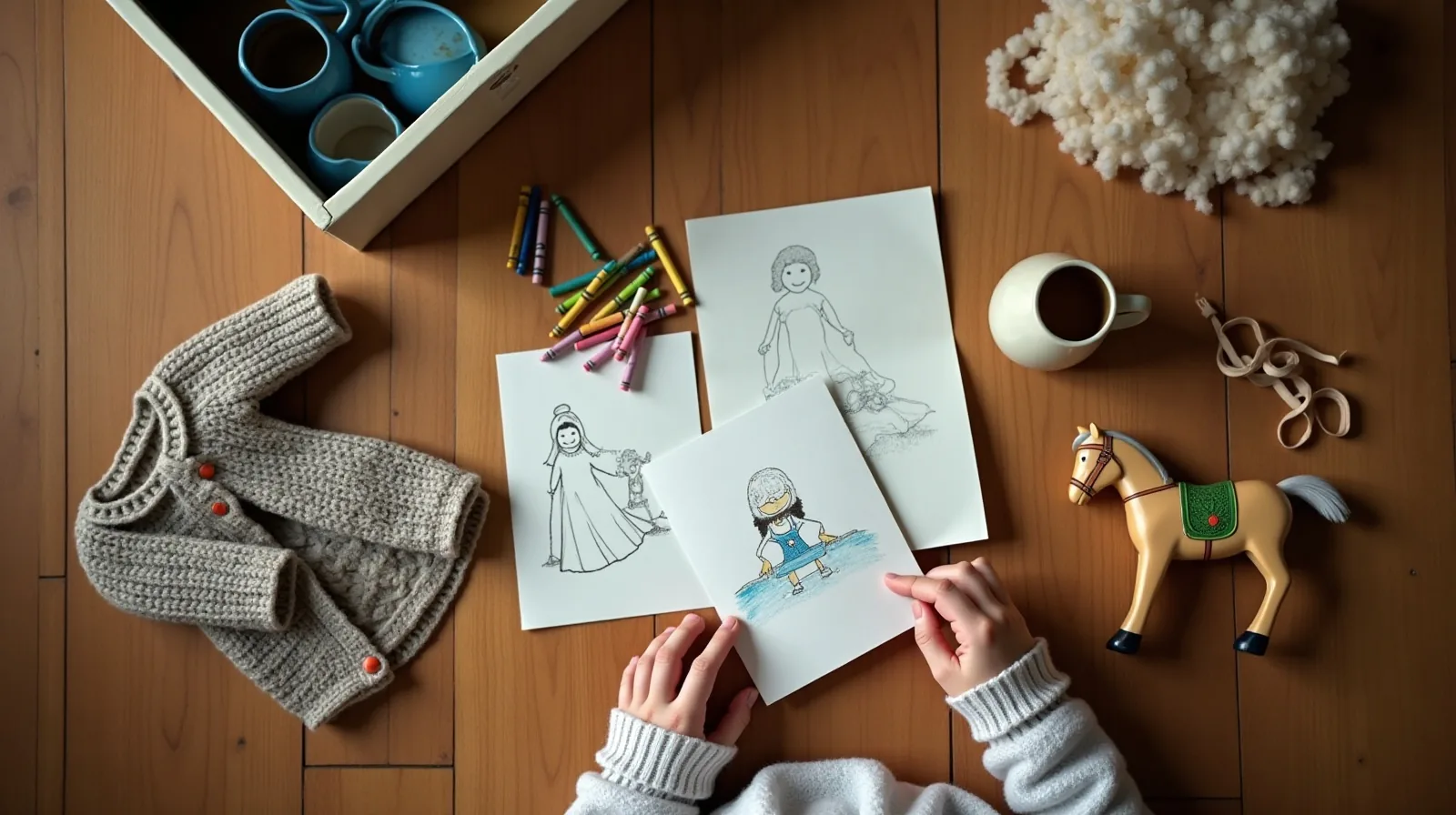
Sorting a kitchen drawer takes an afternoon. Sorting a box of a grandmother’s letters, a stack of small drawings, and a shirt somebody wore for a decade can take years, and often it never happens at all. That is not a discipline problem. Sentimental objects behave differently from everything else in the house, and the usual decluttering advice — be ruthless, set a timer, ask whether it brings joy — skips right past the reason. A different approach helps, and it starts with taking the difficulty seriously.
Why These Boxes Never Get Sorted
An ordinary object asks a simple question: is it used? A sentimental object asks whether the person or the era attached to it still matters, and the honest answer is always yes. So the lid goes back on.
Two practical rules follow. Keepsakes get sorted last, never first — work through the linen closet and the garage while the decisions are easy, so the muscle is warm by the time it counts. And sort in short sessions, forty minutes or so, because this fatigue is emotional rather than physical and it arrives without warning. If the box belonged to someone who has died, give it time; there is no deadline, and grief counselors generally caution against permanent decisions in the first rush of loss.
Photograph It, Then Decide
Most of what an object holds is a memory, and a memory survives a photograph. Lay the drawing flat, hang the dress on a door, set the chipped mug on a plain surface, and take one clear picture. Then write two lines somewhere durable: what it was, who it belonged to, and one thing that happened around it.
That sounds like a consolation prize, and it turns out to be the opposite. The note is usually the part that gets read, while the object itself sat unseen in a box for fifteen years. A folder of photographed keepsakes takes no shelf space, can be shared with family in a minute, and cannot be lost in a flood or a move.
One Box, and the Art of Choosing Representatives
Give each person in the house one container for keepsakes, chosen deliberately and sized honestly: a lidded box that fits on a closet shelf. When it is full, something has to leave before something else goes in. The limit does the deciding, which is exactly the job that is so hard to do item by item.
Inside that limit, keep representatives rather than collections. Thirty drawings from one year become three. A whole wardrobe becomes one scarf that still smells right.
- The one that shows the era. The drawing from the month when everything was dinosaurs says more than nine near-identical siblings.
- The one with handwriting. A note, a signature, or a caption in a familiar hand carries more than the object it is attached to.
- The one that was used. A worn handle and a softened collar hold a person better than the pristine version that was kept for good.
- The one worth displaying. If it could hang in a frame or sit on a shelf, keep it and put it there. Keepsakes in daily view get enjoyed; keepsakes in the attic get moved.
- The one with a story. If a clear story still comes with it, it stays. If the story has already gone, what is left is mostly just an object.
Send It Where It Is Wanted
Letting go feels different when something is going somewhere rather than simply away. A cousin may want the tools. A community theater will take the coats. A quilter can turn a stack of soft shirts into something used every night. Ask around the family first, and be specific about what is available, because a general offer gets a general shrug.
Guilt tends to shrink at that point. Nobody who gave a gift wanted it to become a burden stored in the dark, and handing it to a person who will use it honors the thing far better than another decade in the attic.