A meltdown rarely announces itself politely. A four-year-old goes from fine to furious over the wrong colour cup, and the usual adult moves — explaining, reasoning, counting to three — land on a brain that has temporarily stopped receiving them. A calm-down corner is a small, physical answer to that problem: one predictable spot in the house where a child can go to settle, stocked with things that help a nervous system come back down. Set up well, it becomes a place a child chooses. Set up badly, it becomes a punishment chair with a nicer blanket.
Pick the Spot Before Buying Anything
The location does more work than the contents. A calm-down corner belongs somewhere quiet but not isolated, in a room the family actually uses, out of the main walking path but still within sight of an adult. A stretch of wall behind an armchair, the space beside a bookshelf, the nook under a loft bed: all fine. A closed bedroom on another floor is not, because a child in the middle of a big feeling should never have to travel alone to reach comfort.
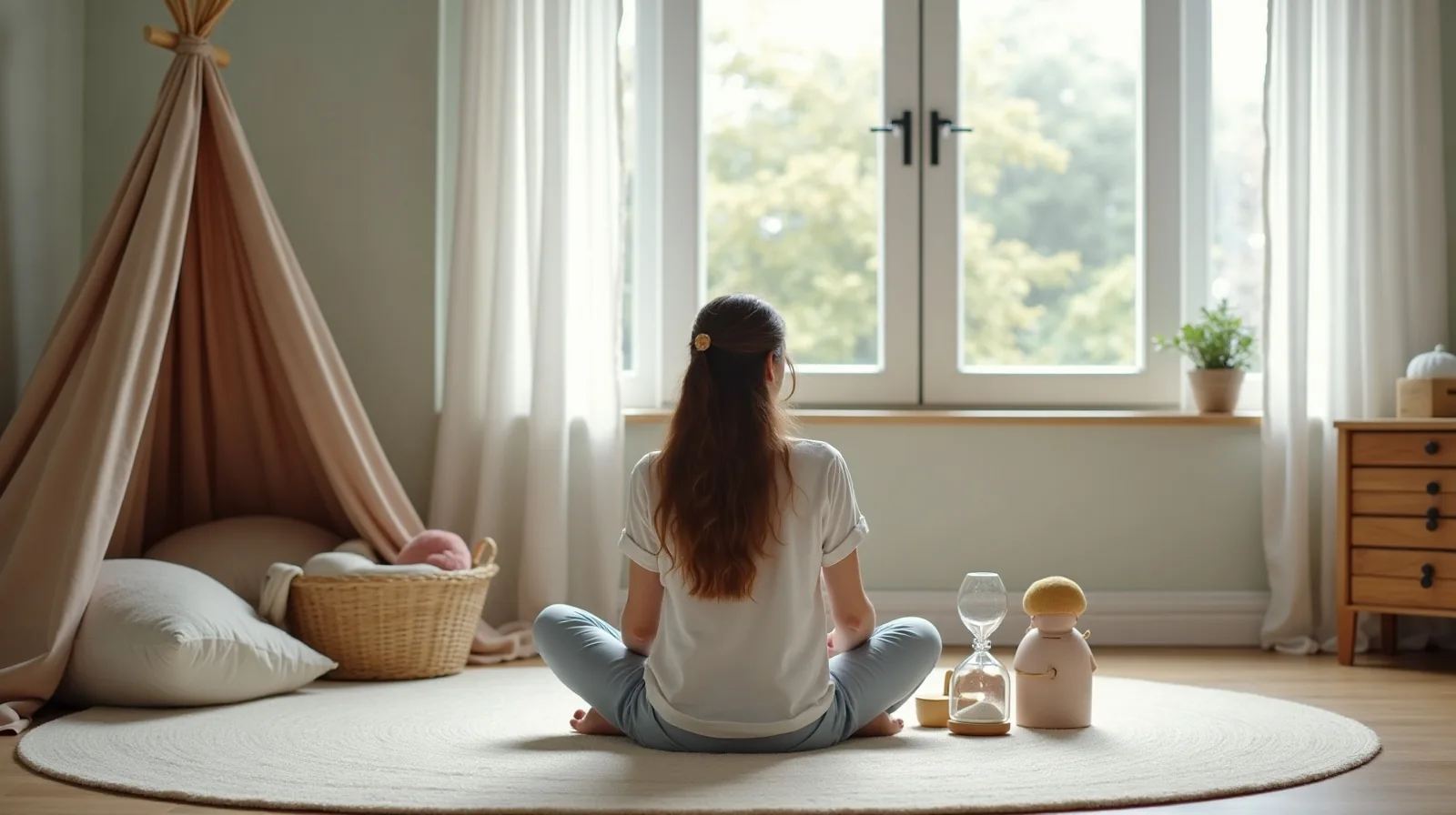
Small helps too. Children settle faster in spaces that feel enclosed, which is why cardboard boxes and under-table forts have such a hold on them. A canopy, a draped sheet, or a bookcase turned sideways gives that feeling without any building.
What Actually Goes In It
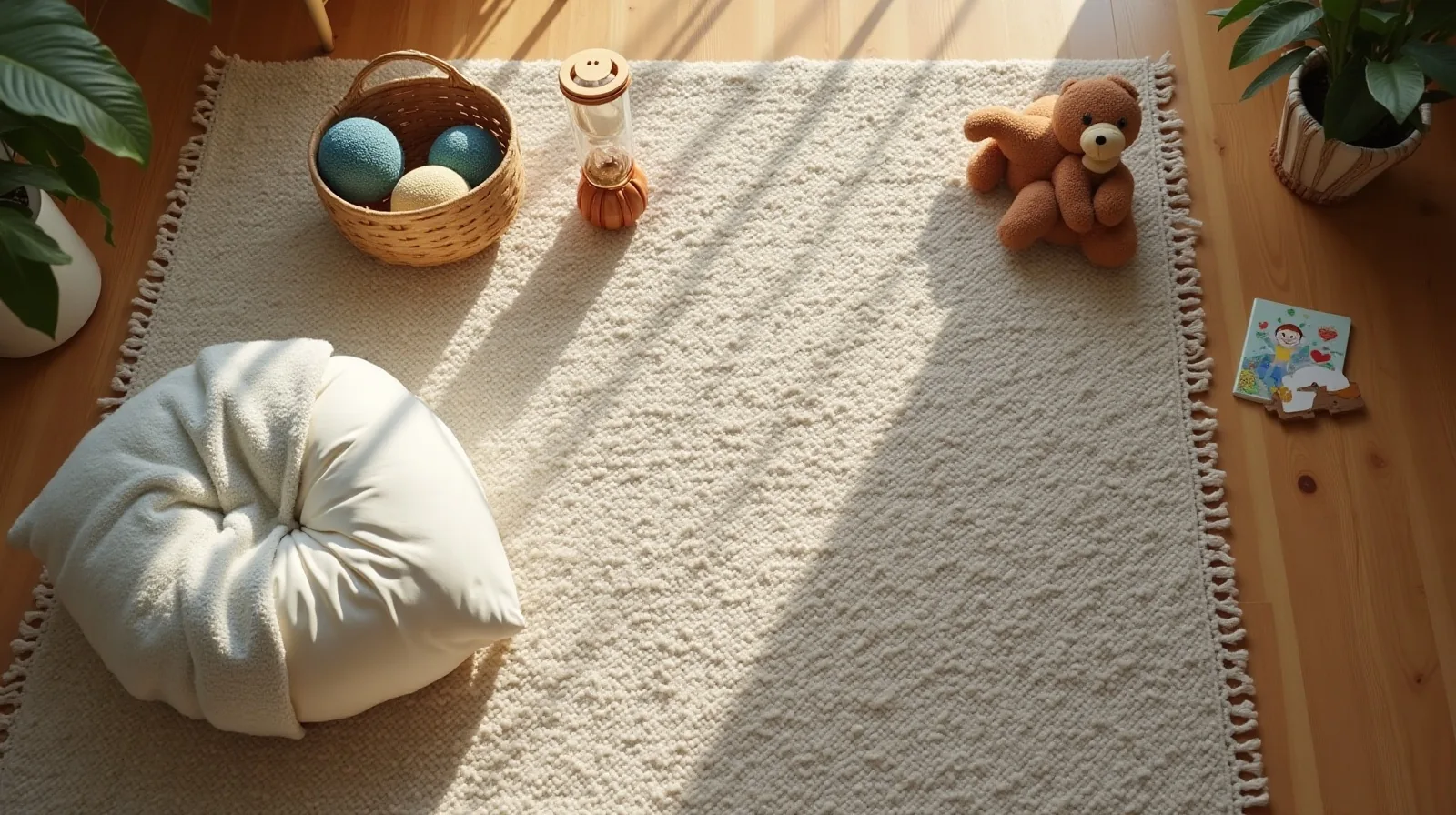
The contents should be boring in the best sense: soft, repetitive, and impossible to get wrong. Four or five items beat twenty, and rotating them every few weeks keeps the corner from turning into a toy pile.
- Something soft to land on. A floor cushion, a beanbag, or a folded duvet. The body settles faster when it has somewhere definite to put itself.
- Something with weight. A small weighted lap pillow, a snug blanket, or a plush animal to squeeze. Steady pressure is calming for a lot of children.
- Something to watch. A glitter jar, a sand timer, or a bubble tube. Watching something drift slowly gives the eyes and the breath a pace to follow.
- Something for the hands. Squishy balls, a length of ribbon, textured fabric, or a simple wooden puzzle. Busy hands quiet a busy head.
- Something that names feelings. A few picture cards showing faces or weather, so a child who cannot find the words yet can point instead.
- Nothing with a screen. Screens end the feeling by covering it, which teaches avoidance rather than recovery.
Introduce It on a Good Day
The introduction decides whether the corner reads as a resource or a consequence. Build it together on an ordinary afternoon, when nobody is upset. Let the child choose the cushion, arrange the basket, and name the space themselves. Then use it once for something small and pleasant, like a story read inside it, so the first association is comfort rather than trouble.
Language matters as much as furniture. “Go to the corner” sounds like a sentence handed down. “Your calm spot is ready if you want it” sounds like an offer. The corner should also never be somewhere a child is sent while an adult is angry; that is a time-out, a different tool with a different purpose.
Use It Together at First
Young children cannot self-regulate on demand. They borrow calm from an adult first and learn to generate it later. For the first several weeks, go to the corner alongside the child, sit low, say very little, and slow the breathing down. Wait for the storm to pass before discussing what happened, because the conversation only lands once the body has settled.
The company needed shrinks over time. A child who has been accompanied twenty times will eventually walk over alone, and that unprompted trip is the goal.
Keeping It Working Over Time
Corners go stale. Swap two items a month, keep the space clear of general toy overflow, and resist expanding it into a play area. Expect regressions during illness, new siblings, and school transitions, and expect the corner to be ignored for weeks at a stretch. If big feelings are escalating in ways that worry you, or a child is regularly hurting themselves or others, a paediatrician or child psychologist is the right next call.