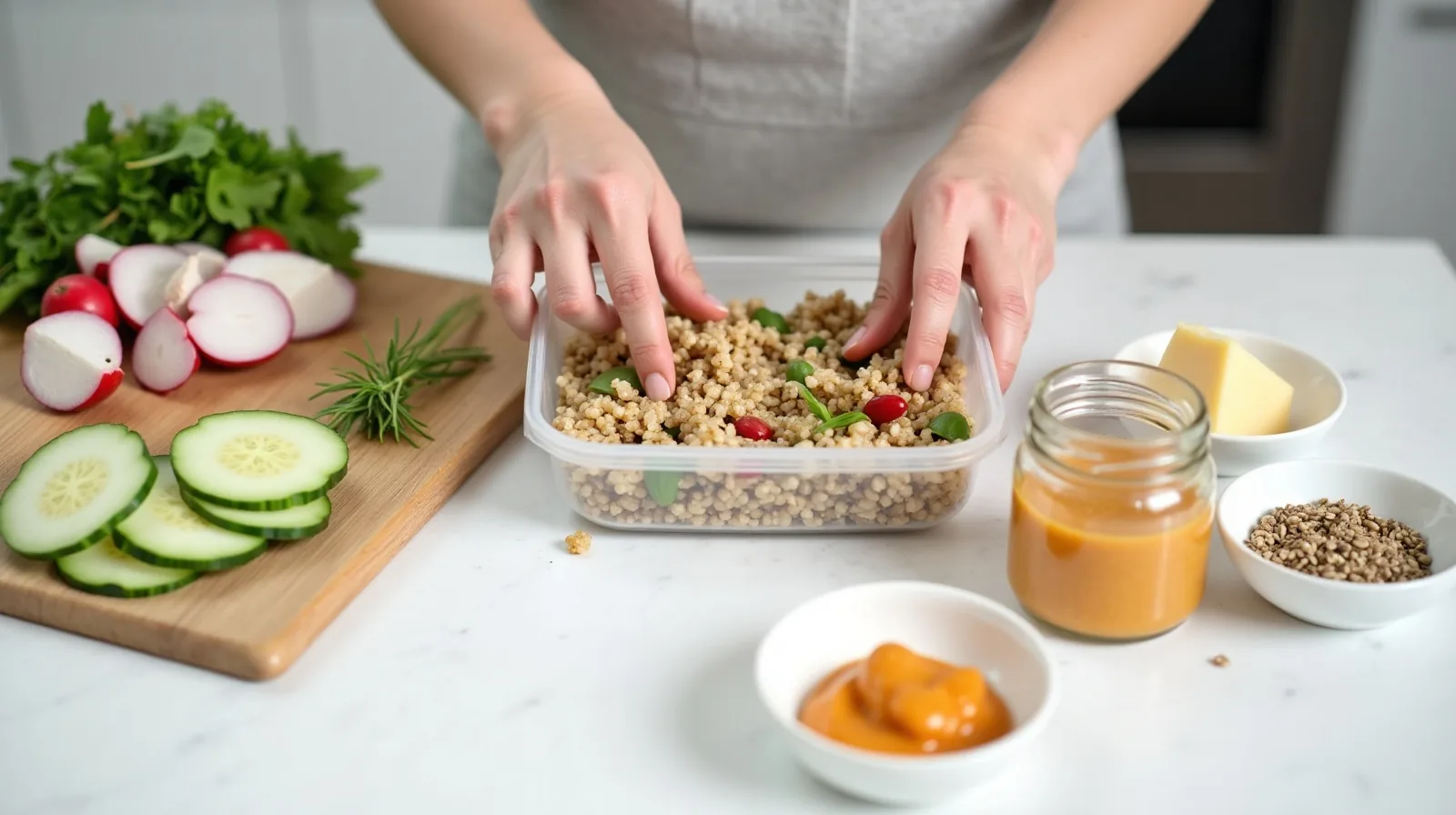
The packed lunch that fails is almost always the one that needed a working stove at ten past seven. Cooking in the morning is a plan that survives until the first bad night’s sleep, and then the sad sandwich takes over: two slices, one filling, eaten at a desk without much interest. Assembly is the fix. Keep six or seven components ready in the fridge and lunch turns into five minutes of picking rather than a cooking project at the worst hour of the day.
Assembly Beats Cooking Every Time
The difference is where the effort sits. A cooked lunch loads all of it onto the morning, the least reliable slot in the week. An assembled lunch spreads that effort across one unhurried session (roast a tray of vegetables while something else is already in the oven, boil a pan of eggs, cook a pot of grains) and leaves the morning with nothing but a container and thirty seconds of judgement.
It also fails gracefully. Miss the prep session entirely and the same components can be bought ready-made without changing the plan. Assembly quietly solves the boredom problem too: five identical containers made on Sunday get abandoned by Wednesday, while five different combinations drawn from one shelf do not.
Stock a Components Shelf, Not a Menu
Think in categories rather than recipes. A grain or a bread. A protein. Something crunchy and raw. Something soft and savoury. A sauce. A topping with texture. Two options in each category quietly produce dozens of lunches without anyone planning a single one of them.
In practice that means cooked grains or a good loaf; roast chicken, tinned fish, hard-boiled eggs or a tub of beans; cucumber, peppers, carrots and radish cut the day they come home; roasted vegetables or a soft cheese; a jar of dressing shaken once for the week; and something with crunch, such as toasted seeds or crisp fried onions. Keep it all in clear containers on one shelf so choosing takes seconds.
Four Builds From the Same Shelf
Every one of these is picking, not cooking.
- The grain bowl. Cooked grains at the bottom, roast vegetables and a protein on top, raw crunch at one side, dressing in its own pot. Sturdy, forgiving, and genuinely good cold.
- The mezze box. A tub of hummus or bean dip in the middle, vegetable sticks fanned around it, a hard-boiled egg, a few olives, and crackers kept in a separate compartment.
- The chopped salad. Everything cut to the same small size, from lettuce and cucumber to cheese and chickpeas, so one forkful carries the whole idea. Dress it at the table, never at home.
- The reverse sandwich. The filling packed as a salad and the bread carried alongside, put together a minute before eating. The bread stays crisp and nothing has been sitting in mayonnaise since dawn.
Keeping the Crisp Things Crisp
Sogginess has three causes, and each has a plain answer. Water migrates, so anything wet travels in its own small pot: dressing, salsa, yoghurt, cut tomato. Steam condenses, so warm food only goes into a container once it has cooled properly. And absorbency runs one way, so the dry, thirsty things — bread, crackers, seeds, tortilla chips — need to sit where they never touch the wet ones, even if that costs a second container.
Salt is the quieter culprit. Salting cucumber or tomato at home draws water out within the hour, so leave the salt in the dressing or at the table. A folded square of kitchen paper laid over washed leaves takes up the last of the rinse water and keeps them from wilting by noon.
The Two-Minute Morning
With a stocked shelf, the morning routine is short enough to do half-awake: open the container, put the base in, add a protein, add two raw things, scatter the crunch on top, clip a small pot of dressing to the lid. Then add something cold if lunch is more than three or four hours away. That last step matters more than people assume, because food left at room temperature all morning is both less pleasant and less safe to eat.