
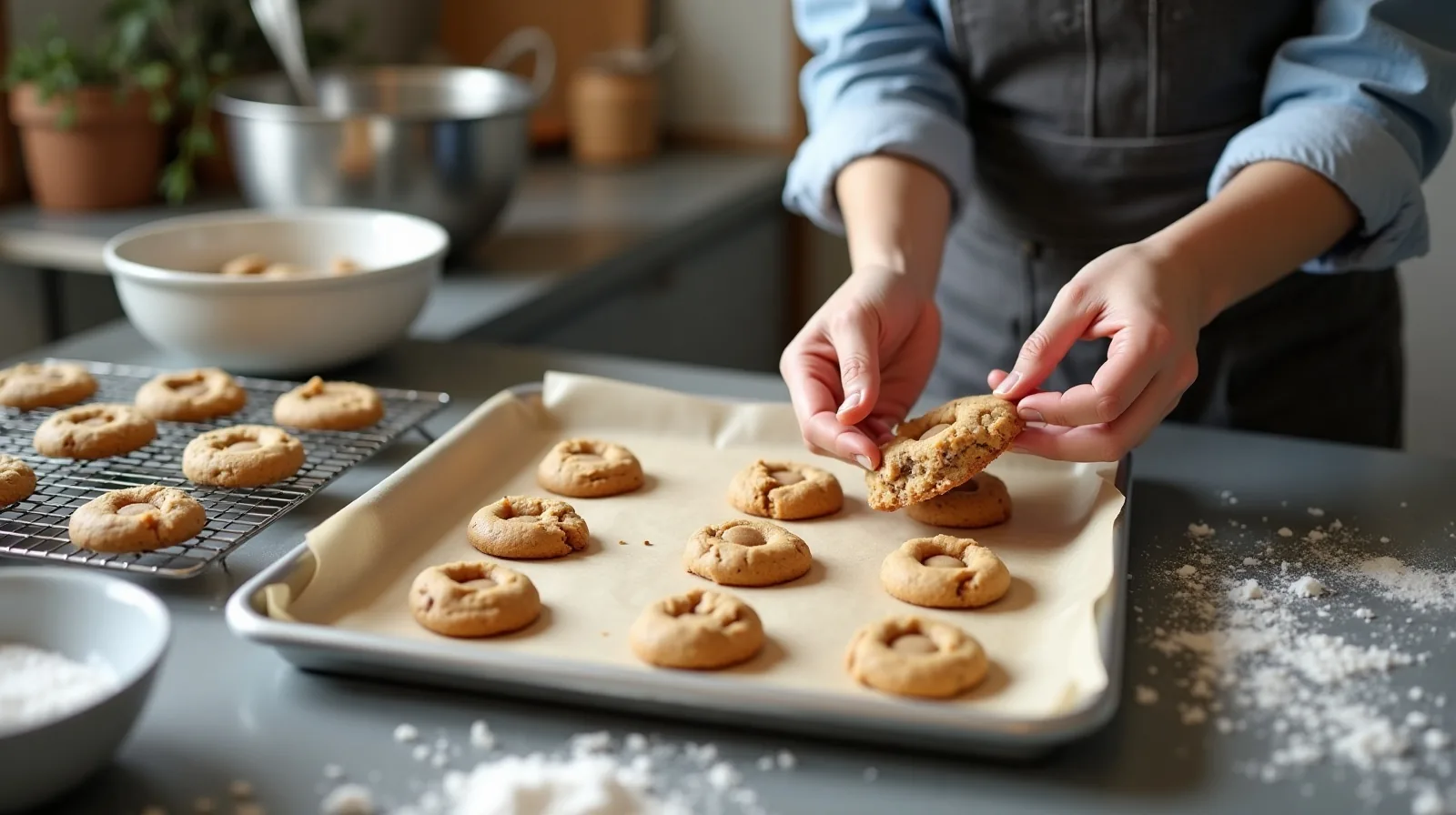
The first tray is where holiday baking usually goes sideways. Twelve neat balls of dough go into the oven and one enormous cookie with scalloped edges comes out, or the batch bakes into small hard pucks that could pass for ornaments. The recipe rarely deserves the blame. Beginners tend to pick the fussiest cookies on the list, then work with warm dough on a crowded pan, and those three choices account for most first-time disappointments.
Start With the Cookies That Behave
Some cookies are chemistry projects and others are barely more than stirring and scooping. Rolled-and-cut sugar cookies, thin lace cookies, piped meringues, and anything involving tempered chocolate punish small mistakes, which is a rough way to spend a December afternoon. The forgiving ones share a trait: the shape comes from a scoop or from the pan, so nothing depends on rolling a sheet of dough to an even thickness.
- Drop cookies. Chocolate chip, oatmeal, peanut butter. Scooped straight from the bowl, and a slightly uneven scoop still bakes into a perfectly good cookie.
- Bar cookies. One pan, one layer, cut into squares once cool. Blondies, brownies, and shortbread bars turn an hour of shaping into five minutes of spreading.
- Thumbprints. Roll a ball, press a dent with your thumb, fill it with jam. They are supposed to look handmade, so irregular ones read as charming rather than wrong.
- Slice-and-bake logs. The dough chills into a cylinder in the fridge and gets sliced into rounds. Tidy edges with no rolling pin anywhere in sight.
- Sugar-rolled crinkles. Balls rolled in granulated or powdered sugar crack open as they spread, and the cracks are the whole look, so there is no wrong pattern to get wrong.
Cold Dough Is the Whole Trick
Spread is controlled by temperature more than by anything else in the recipe. Butter that has gone soft and greasy in a warm kitchen melts almost immediately in the oven, and the dough runs outward before the flour and eggs have set into a structure. Butter at cool room temperature, firm enough to hold a fingerprint without collapsing, creams properly and holds its shape considerably longer.
Chilling finishes the job. Give mixed dough at least thirty minutes in the fridge, and an hour or overnight if the schedule allows, which also deepens the flavor as the flour hydrates. Scooping the balls first and chilling them on a plate is even better, since they go onto the pan genuinely cold. One more rule saves a lot of trays: never scoop dough onto a sheet that just came out of the oven, because it starts melting before the door shuts.
Pans, Spacing, and One Sheet at a Time
A heavy, light-colored rimmed sheet lined with parchment is the entire equipment list. Thin dark pans absorb more heat and brown the bottoms before the centers set, which is where those hard little pucks come from. Give each cookie roughly two inches of clear space in every direction, which usually means eight to twelve per sheet rather than the sixteen that appear to fit.
Bake one sheet at a time on the middle rack and rotate it halfway through, since two sheets at once means uneven airflow and a bottom tray that browns strangely. Let the pan cool completely between batches, and pull the cookies earlier than instinct suggests: edges set and matte, centers still looking slightly underdone. They keep cooking on the hot pan, so two minutes there and then a wire rack is the sequence.
Dough Keeps Better Than Cookies
Baked cookies are best on day one, but dough is happy to wait. Scoop balls onto a tray, freeze them solid, then tip them into a bag; they bake straight from frozen with an extra minute or two and no thawing at all. Wrapped logs of slice-and-bake dough keep for weeks in the freezer and can be cut while still firm.
For cookies already baked, store crisp types and soft types in separate airtight containers, since the crisp ones give up their snap to any moisture nearby. A slice of plain bread tucked into the container keeps soft cookies soft for a few extra days.