There is a specific restlessness that shows up in kids around four in the afternoon after a day spent mostly sitting: loud voices, bickering over nothing, and a third request for a snack nobody is actually hungry for. Sending everyone outside helps, but an empty yard on its own does not finish the job. What drains energy is a game with a shape to it, something with a start, a rule, and a reason to keep running. The genuinely tiring ones need almost nothing beyond grass and whatever is already sitting in the garage.
What Makes a Game Actually Tiring
Sprints beat jogging. A game that has kids running short bursts, stopping, changing direction, and running again wears them out much faster than a long steady loop, and it holds attention better because something is always about to happen. Two other ingredients matter. There should be no line to stand in, since waiting for a turn is exactly where energy quietly comes back, and the rules should fit into one sentence so nobody spends ten minutes negotiating before anyone moves. A game that needs a referee tends to end in an argument. A game that explains itself in a breath can run for an hour.
Games That Need Almost Nothing
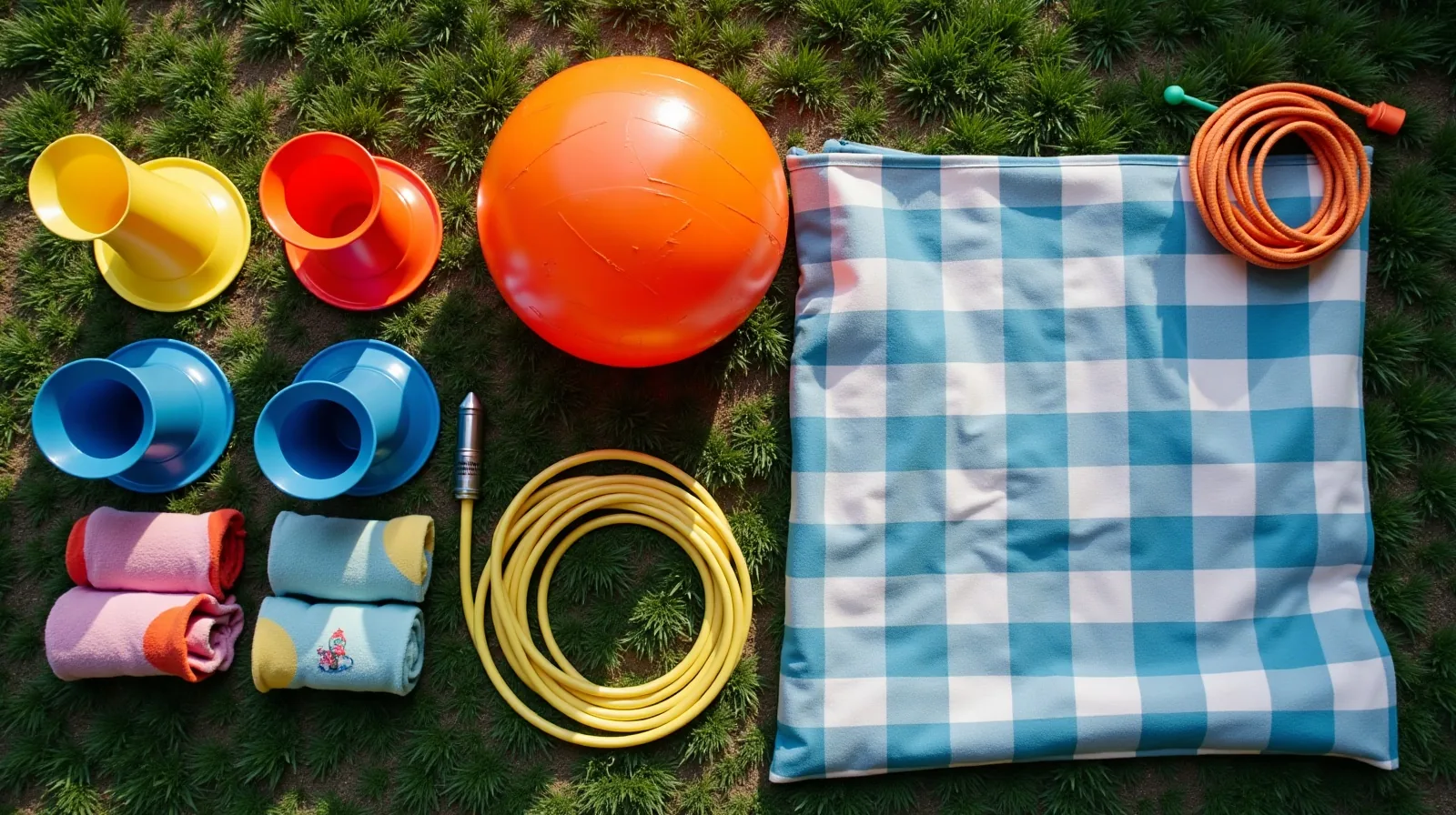
Everything below runs on a patch of grass and a few household objects. Cones can be shoes, rolled socks, or upside-down cups, and a boundary can be a garden hose laid on the lawn.
- Freeze tag with a rescue rule. Frozen players get unfrozen when a teammate crawls between their legs, which keeps everyone moving instead of standing around waiting to be saved.
- Sock toss relay. Rolled socks thrown into a laundry basket from a line, one thrower at a time, with the whole team sprinting out to collect the misses.
- Cone shuttle. Three markers set at increasing distances, sprint out and back to each in turn. Simple, brutal, and over in about ninety seconds.
- Sharks and minnows. One tagger stands in a marked lane while everyone else sprints across it. Anyone tagged becomes a tagger, so the lane gets harder every round.
- Obstacle loop on a timer. A course built from a lawn chair to weave around, a rope to jump, and a slope to climb. Kids repeat it far more times than any adult would suggest.
- Capture the flag with two towels. Two territories, two towels, one jail. It scales to almost any number of players and outlasts everything else on the list.
Scaling One Game by Age
The same game can serve a five-year-old and an eleven-year-old if the field changes rather than the rules. Younger kids need a shorter run, a bigger target, and a safe zone they can reach in a few steps. Older kids need more distance, a smaller target, and some constraint that makes it harder, such as hopping, carrying something, or running the loop backwards. Age also changes the tolerance for elimination. Below about seven, being out is the end of the fun, so build in an automatic way back in. Older players handle being knocked out fine, as long as the round resets quickly.
Running It With a Mixed-Age Crowd
Mixed ages are the normal case in a backyard, and the fix is handicaps rather than separate games. Give the oldest players a job that slows them down: run backwards, count to three before chasing, or take the permanent tagger role. Pair a big kid with a small one so the team competes rather than the individual. Keep rounds short, three or four minutes, and rotate roles between rounds so nobody sits in the same position long enough to get bored or discouraged. Leave an easy way out for anyone who wants it, because a kid who is finished and made to keep playing turns a good afternoon sour. Water and a shady break every twenty minutes or so keeps a warm day from ending in tears.