
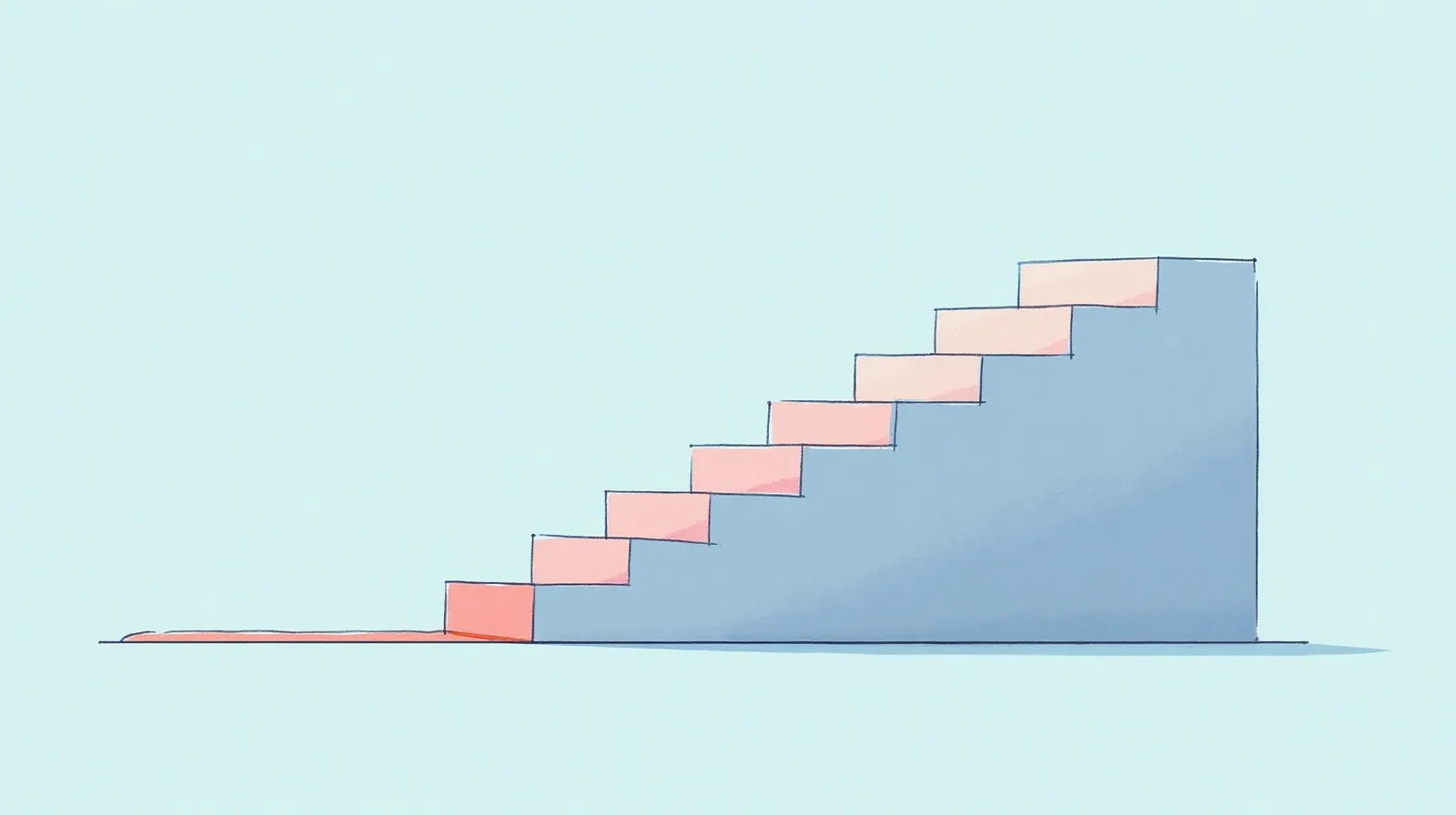
Three weeks off turns into three months faster than anyone plans. An injury, a heavy stretch at work, a holiday, a whole winter, and the return keeps sliding, partly because the memory of the last good session sets an unhelpful standard. The instinct is to pick up roughly where things stopped. That instinct is the most common reason a comeback ends inside a fortnight, sore and faintly injured, right back at the start.
Why the First Week Should Feel Too Easy
Fitness fades unevenly, and the parts that fade fastest are not the parts that hurt when you rush. Aerobic capacity drops noticeably within a few weeks off. Strength hangs on longer, which is exactly the trap: the nervous system still remembers how to move a heavy weight while tendons, ligaments and connective tissue have quietly lost some tolerance for load. Muscle adapts in weeks. Tendon takes considerably longer, and it is usually tendon that complains first.
The honest starting point after a month or more away sits near half of the last comfortable working load and around half the previous volume. It feels faintly ridiculous on day one, and it is also the reason week four ever arrives.
A Two-Week Ramp That Holds
Treat the first fortnight as re-entry rather than training. Week one: two or three short sessions, each stopping while it still feels easy, with light full-body work plus a walk or an unhurried ride. Week two: the same sessions with slightly more weight or a few more minutes, still ending well before anything approaches failure. Nothing goes to the limit for fourteen days.
From week three, add roughly ten percent to one variable at a time, either the load or the duration, never both in the same week. Progress built this slowly still stacks up quickly, because the body spends it on adaptation instead of repair.
Guardrails That Keep a Comeback Alive
A handful of rules do most of the injury-prevention work in a restart.
- Leave reps in reserve. Finish every set feeling that two or three more were available. Sets taken to failure in the first month buy soreness rather than adaptation.
- Full range before extra weight. If a movement cannot be done through its whole range, the weight is wrong, not the range. Range returns first, load second.
- One new thing per week. A new exercise, a new intensity, a new frequency: introduce them one at a time so anything that goes wrong is traceable.
- Respect the old injury. Whatever caused the break deserves a slower ramp than everything else, and a professional opinion if it ever complained loudly.
- Warm up longer than feels necessary. Ten minutes of easy movement through the ranges about to be trained does more for a returning body than static stretching.
What Soreness Is Actually Telling You
Expect to be sore, and expect it to be worse than memory suggests, because the first sessions back reliably produce more stiffness than identical work did before the break. That kind of soreness is dull, fairly symmetrical, shows up a day or two later, and eases with gentle movement. It usually peaks after the second or third session and shrinks quickly.
The other kind is worth stopping for: sharp, one-sided, felt inside a joint rather than across a muscle, or still building three days on. Pain that changes how you walk or lift is a signal to back off and, if it persists, to see a physiotherapist or doctor rather than train through it. Anyone coming back after an illness, surgery, a pregnancy or a long medical gap should get clearance first — the ramp above assumes a body that was simply unused, not one still healing.
Rebuild the Habit Before the Load
The first month is really a scheduling problem in a fitness costume. Two sessions a week that genuinely happen beat five that only exist on paper, and the surest way to make them happen is to fix the time and the place before fixing the programme. Short counts. Twenty-five minutes, three times a week, at the same hours, will do more across a season than a heroic fortnight followed by silence.